
Snowcat vehicles have been used for over 75 years as a means of transportation in snowy and mountainous regions. They are specially designed vehicles that are capable of navigating through deep snow and steep terrain. They have evolved significantly over the years, from simple vehicles with limited capabilities to sophisticated machines that are used for a variety of applications. In this article, we will explore the evolution of snowcat vehicles and how they have become an integral part of winter travel and recreation.

Early Years of Snowcat Vehicles
The earliest snowcat vehicles were developed in the 1930s and 1940s. They were primarily used for snow grooming and the transportation of goods and people in snowy regions. These vehicles were usually tracked, and their top speeds were limited to around 15 miles per hour. They were heavy and cumbersome, making them difficult to maneuver on steep terrain. However, these vehicles became the forefathers of some of today’s most advanced snow vehicles.

Tucker Sno-Cat Corp at Crater Lake, 1949
Through the 1950s-1970s Snow Vehicles Evolved Rapidly
During the 1950s and 1960s, snowcat technology began to evolve rapidly. The development of hydraulic systems and engines with higher horsepower made snowcats more powerful and easier to control. These advancements allowed for faster speeds, improved handling, and increased payloads. Snowcats were used for a variety of applications, including snow grooming, search and rescue, and transportation of people and equipment in mountainous regions.
In 1957, a party led by two daring adventurers, Vivian Fuches and Sir Edmund Hillary, set out to attempt the first trip across Antarctica, crossing the South Pole. The team used a variety of tracked snow vehicles, including a Tucker Snow-Cat that was modified to endure the grueling conditions. The expedition crossed the Antarctic in 99 days, making the team the third group to ever make it to the South Pole and the first to do so by motorized vehicles.
One of the Snowcat vehicles found itself in quite a dilemma during the journey. Although it delayed the expedition by about a day, the team was able to rescue the Snowcat.


The 1980s-2000s Made Snowcats More Efficient and Reliable
The 1980s brought significant improvements in snowcat technology, with the introduction of computerized control systems, advanced hydraulics, and better suspension systems. These advancements made snowcats more efficient, reliable, and capable of operating in a wider range of conditions. Snowcats became more common in the ski industry, where they were used for grooming slopes and transporting skiers to remote locations.
In the 1990s, snowcat technology continued to evolve, with the introduction of lightweight materials, such as aluminum, and more powerful engines. These advancements allowed for faster speeds and increased payloads. Snowcats were used for a variety of applications, including search and rescue, exploration, and transporting people and equipment in extreme conditions.
Modern Snowcats Harnessing Technology
Today, snowcat technology has advanced significantly, with a focus on environmental sustainability and reducing environmental impact. Modern snowcats are designed to be more fuel-efficient, emit fewer emissions, and produce less noise. They are often equipped with cutting-edge technology, including GPS systems, high-tech communication systems, and advanced safety features.
Snowcats are now widely used in the ski industry for snow grooming, transporting skiers and equipment, and supporting avalanche control operations. Beyond ski resorts, they play an important role in search and rescue, scientific exploration, and transportation across extreme winter environments. Their versatility has also made them valuale to a wide range of industries, including large ranches, oil and energy companies, surveyors, utility providers, and winter tour operators.

Army Green Sno Trac
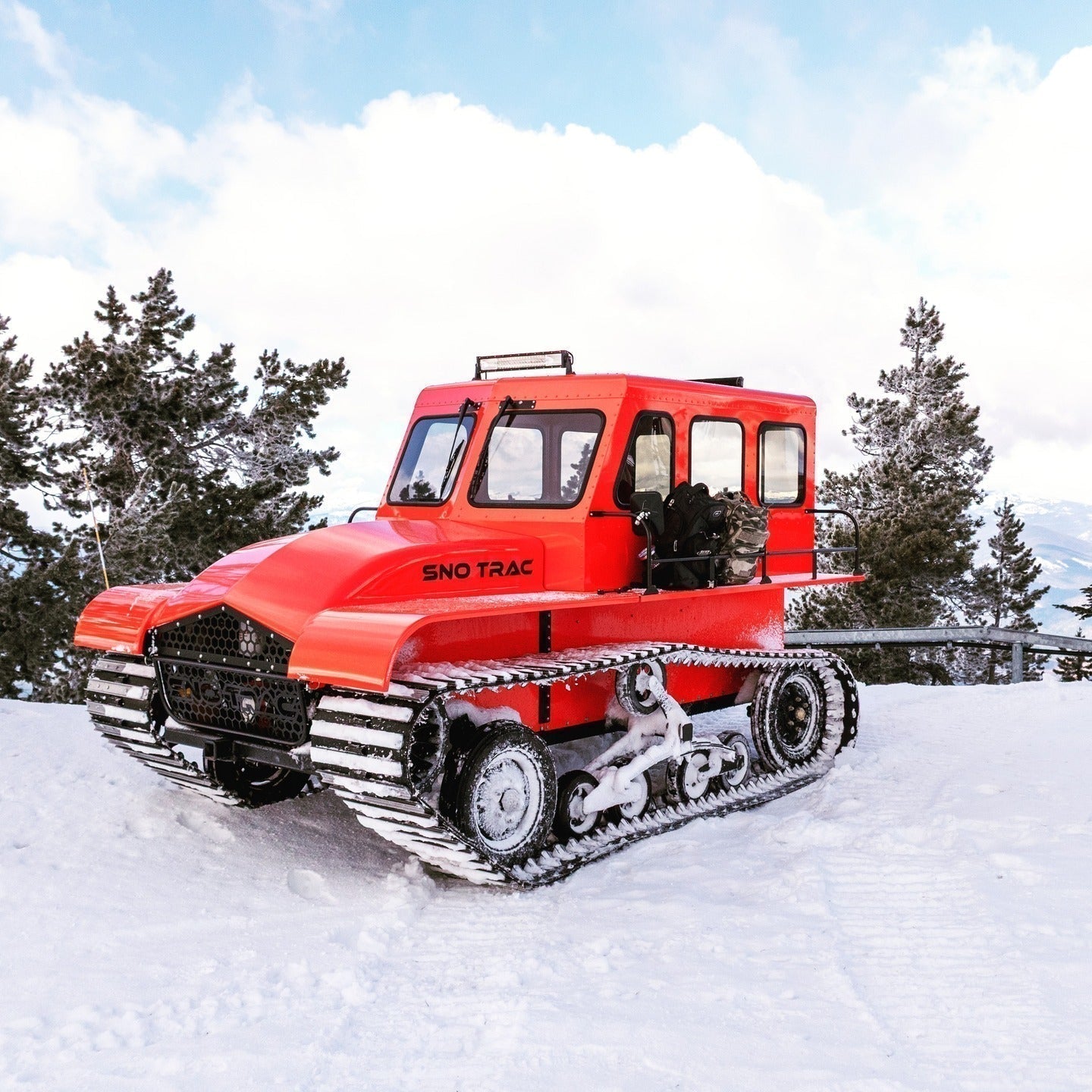
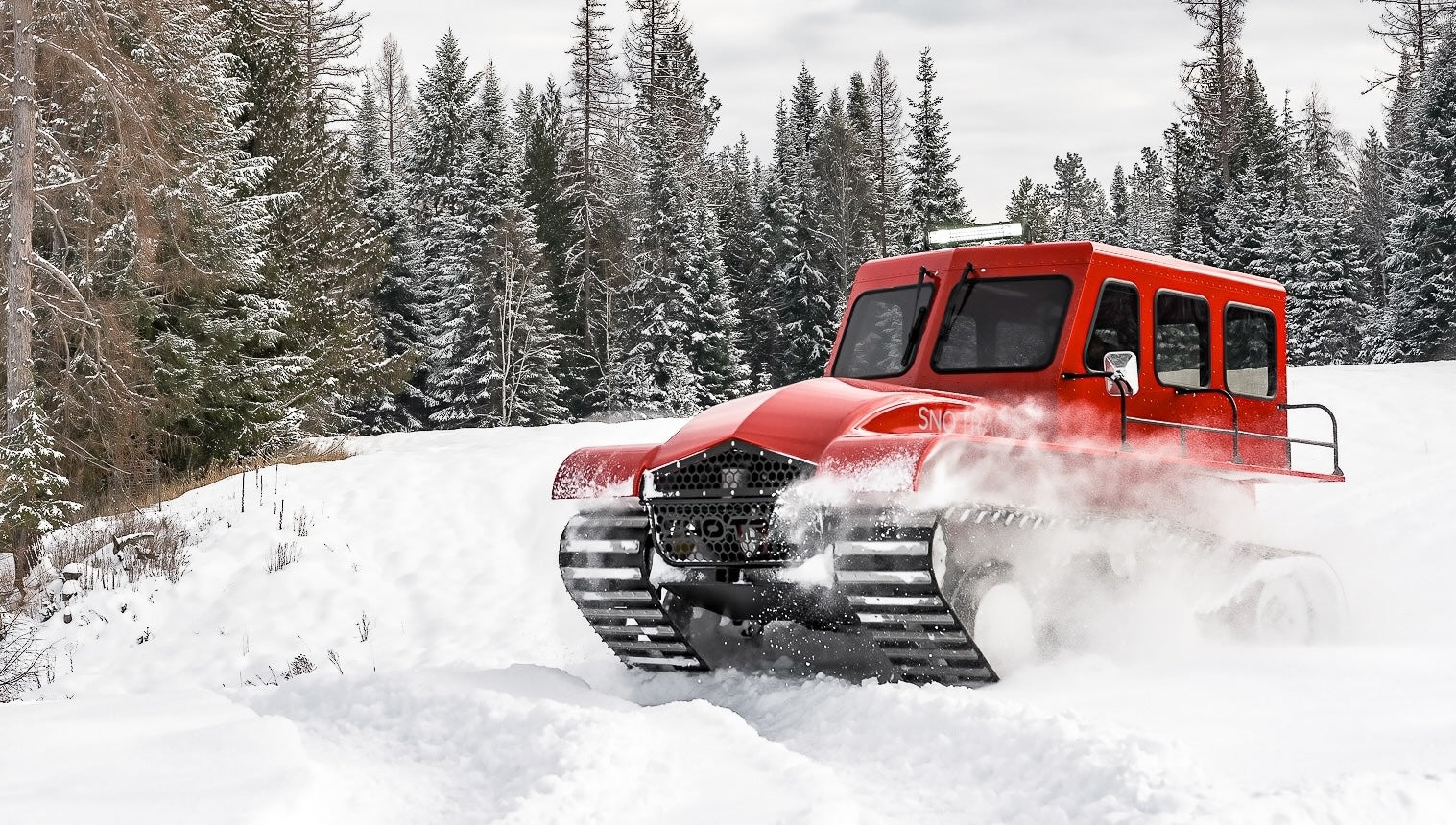
The present-day Sno Trac is the latest in snowcat vehicle technology. It is a new and improved version of the 1950’s Aktiv Snow Trac. TFT- Sno Trac, LLC was formed in April 2013 to develop and manufacture a new version of the Snow Trac that utilizes modern components and newer manufacturing processes, resulting in “Sno Trac”. Designed to be light on its feet and small enough to tow on a standard-sized vehicle trailer, Sno Trac is easy to transport wherever the snow is. This vehicle uses state-of-the-art, emissions-compliant technology to allow its driver to dominate the snow for both recreational and professional purposes.

Snowcat Vehicles Continue to Play an Essential Role in Winter Travel
The evolution of snowcat vehicles has been remarkable over the past 75 years. From primitive snow-grooming and transport machines to sophisticated vehicles serving a wide range of applications, snowcats have come a long way. With the development of advanced technology, snowcats have become more efficient, reliable, and environmentally friendly. They remain essential for winter travel, recreation, and work, with the versatility and capability to operate in some of the world’s most extreme environments.
Learn more about Sno Trac
Learn more about Sno Trac specs and dimensions
CONTACT US with any questions

Share:
The History of Sno Trac
How a Snow Vehicle Can Help with Winter Rescue Operations